Take Action: Call AMC to Demand the Removal of "Love After Lockup"
-

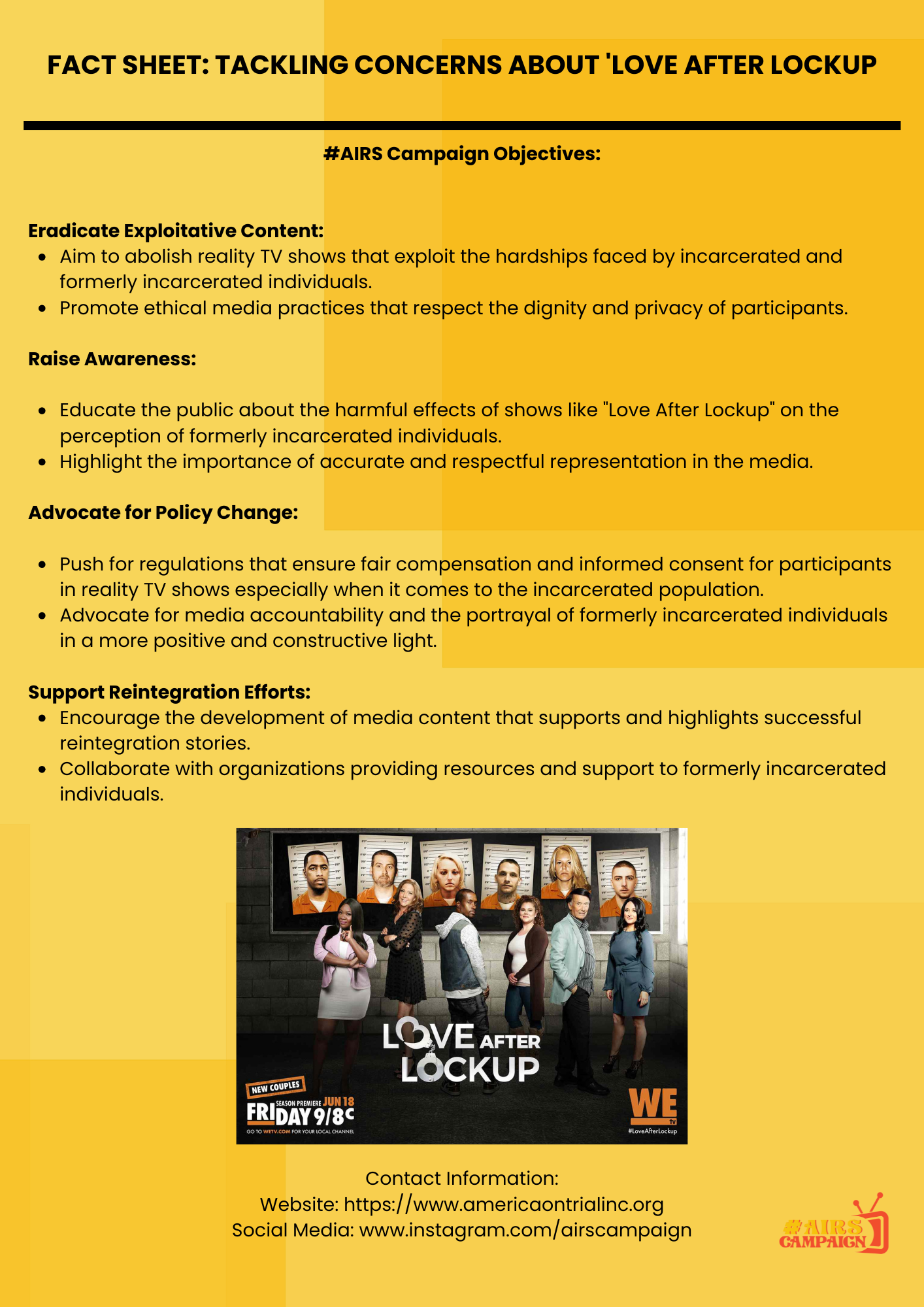
Join us in urging AMC Networks to remove Love After Lockup from their programming lineup. This show exploits and sensationalizes the lives of formerly incarcerated individuals and their loved ones, perpetuating harmful stereotypes, stigmatizing marginalized communities, and normalizing the prison-industrial complex.
Contact AMC’s office directly at 212-324-8500 and make your voice heard.
Phone Script:
“Hello, my name is [Your Name], and I’m calling from [Your City, District, or Community]. I strongly urge AMC and its leadership to cancel the show Love After Lockup.This program is exploitative and perpetuates damaging stereotypes about formerly incarcerated individuals and their families. It reinforces stigmas that make reintegration into society more difficult while profiting from their struggles. Love After Lockup undermines efforts for meaningful criminal justice reform and fuels harmful perceptions of incarceration.I ask AMC Networks to act responsibly and remove this harmful content from their programming. Thank you for your time.”
Make the call today and join us in standing against exploitative media!
ADD YOUR NAME TO OUR PETITION
-

Urging AMC Networks' to End “Love After Lockup”. The #AIRS Campaign Urges AMC Networks' CEO Kristin Dolan, President Dan McDermott, and the Board of Directors to Cancel Love After Lockup. Help us end the exploitation of formerly incarcerated individuals and their families. Sign our petition and share it with your network! Our goal is to gather 5,000 signatures to demand action. Sign Petition here.
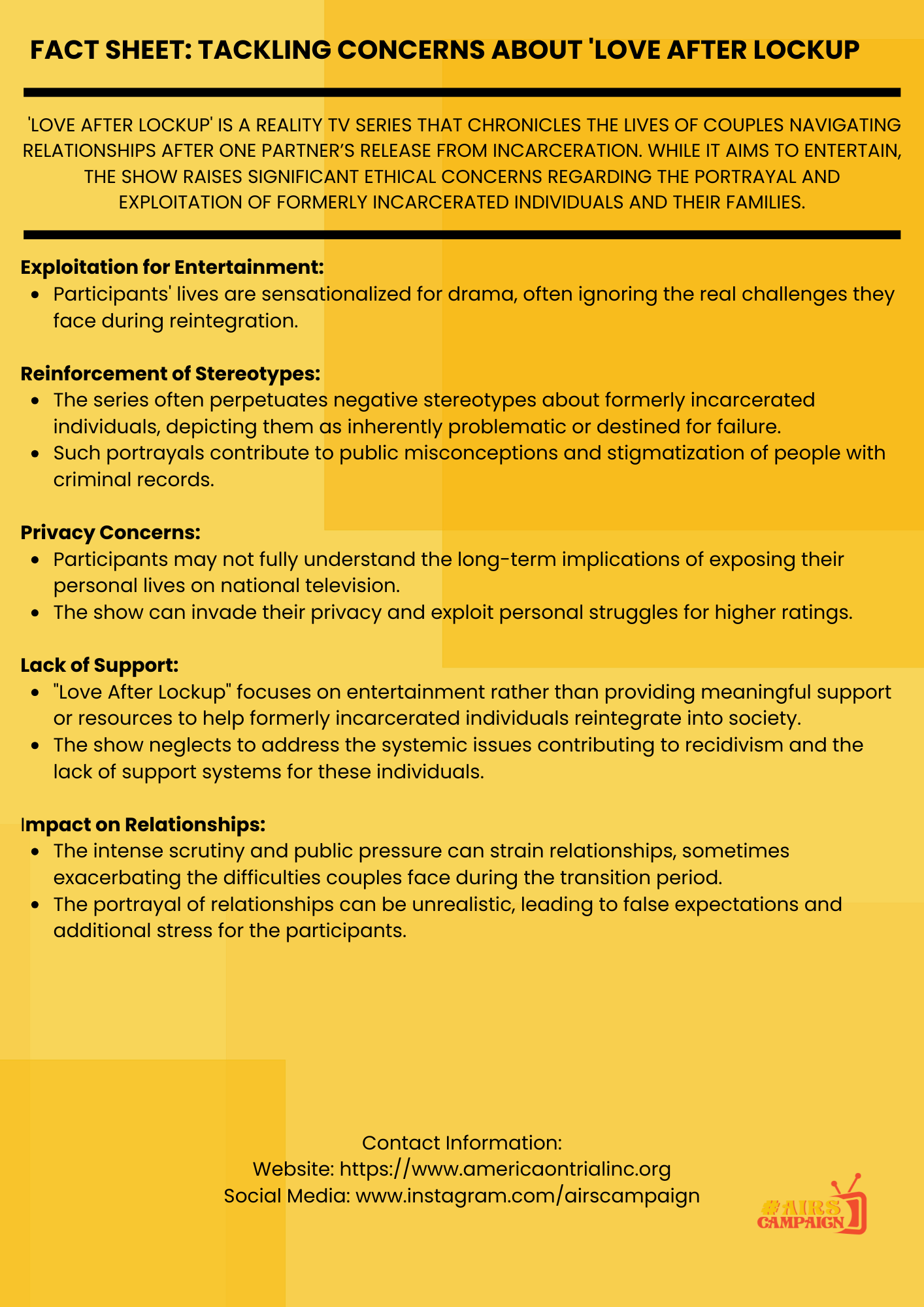
FACT SHEET: “LOVE AFTER LOCKUP”
Overview-
Love After Lockup follows couples in which one partner has recently been released from prison, raising serious ethical concerns about exploiting formerly incarcerated individuals for entertainment.
Key Issues-
Exploitation: Sensationalizes personal struggles for drama, ignoring the realities of reintegration.
Stereotypes: Reinforces negative narratives and public misconceptions about incarcerated people.
Privacy Violations: Exposes participants’ lives without fully informed consent or awareness of consequences.
Lack of Support: Prioritizes entertainment over resources and support for reintegration.
Strained Relationships: Public scrutiny and pressure create unrealistic expectations and harm personal bonds.