The Rise of Incarceration Reality TV
Understanding the Phenomenon
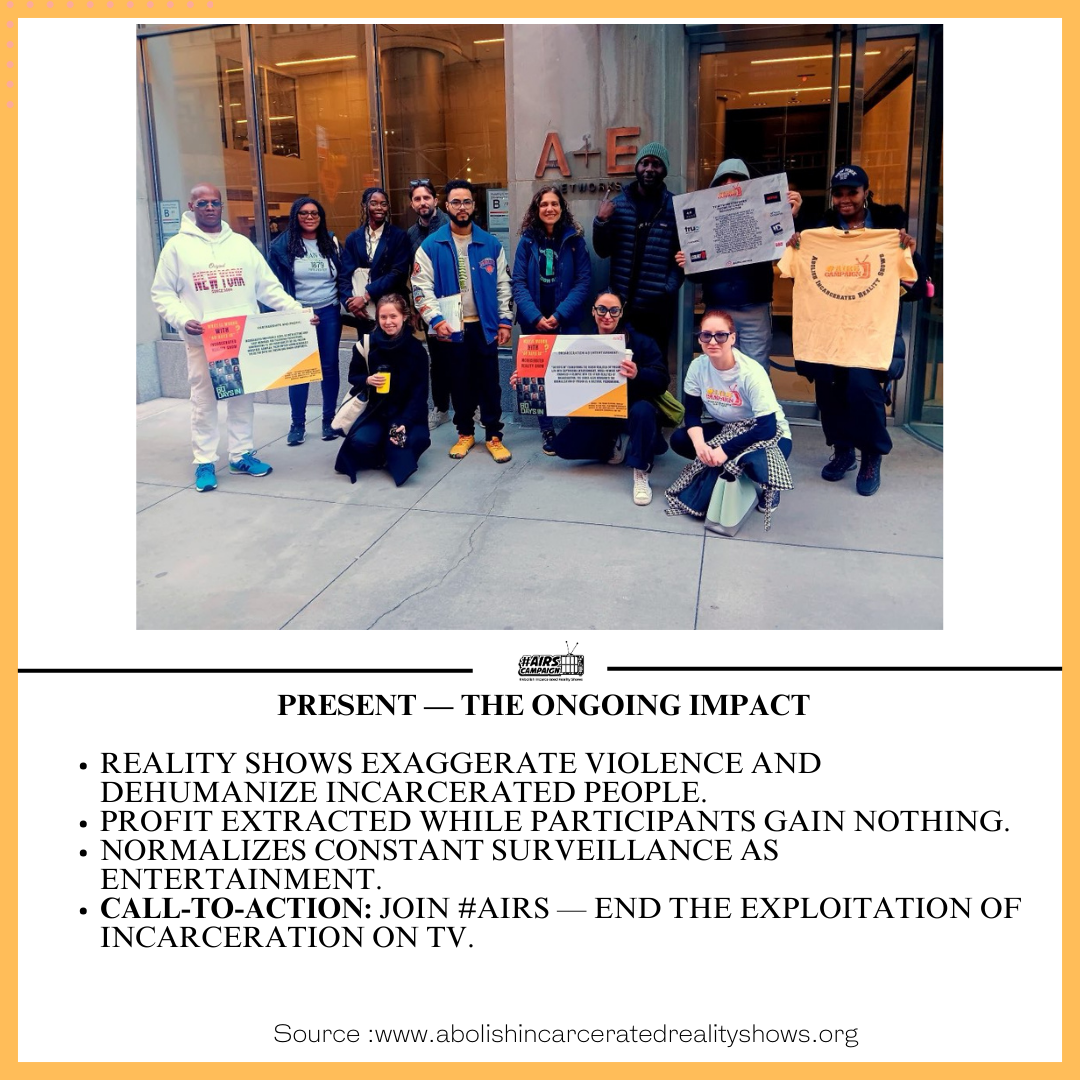
The #AIRS (Abolish Incarcerated Reality Shows) campaign fights to end all reality TV programs that turn the lives of incarcerated people into entertainment for profit. These shows exploit human hardship, normalize surveillance and punishment, and generate revenue while participants gain nothing.
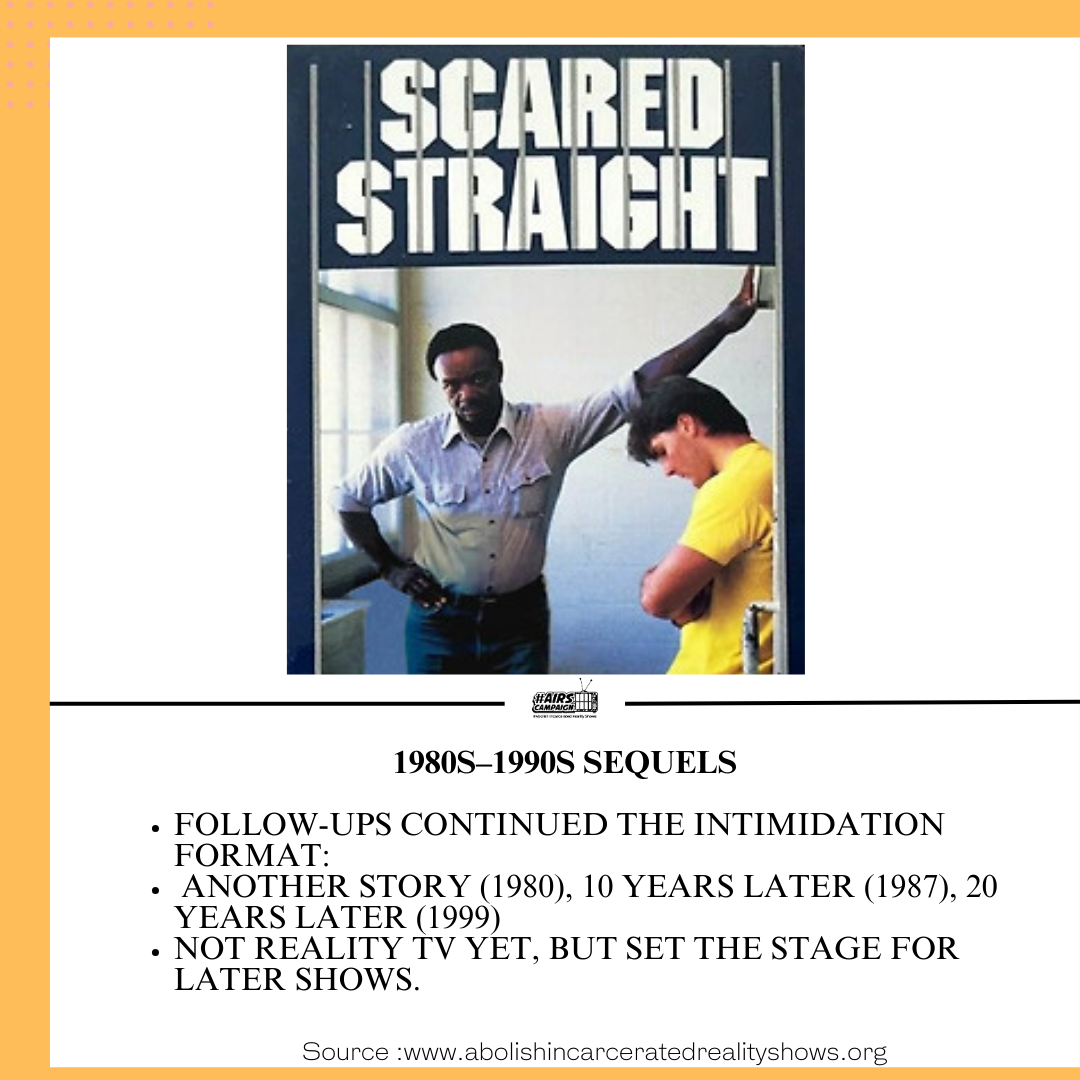
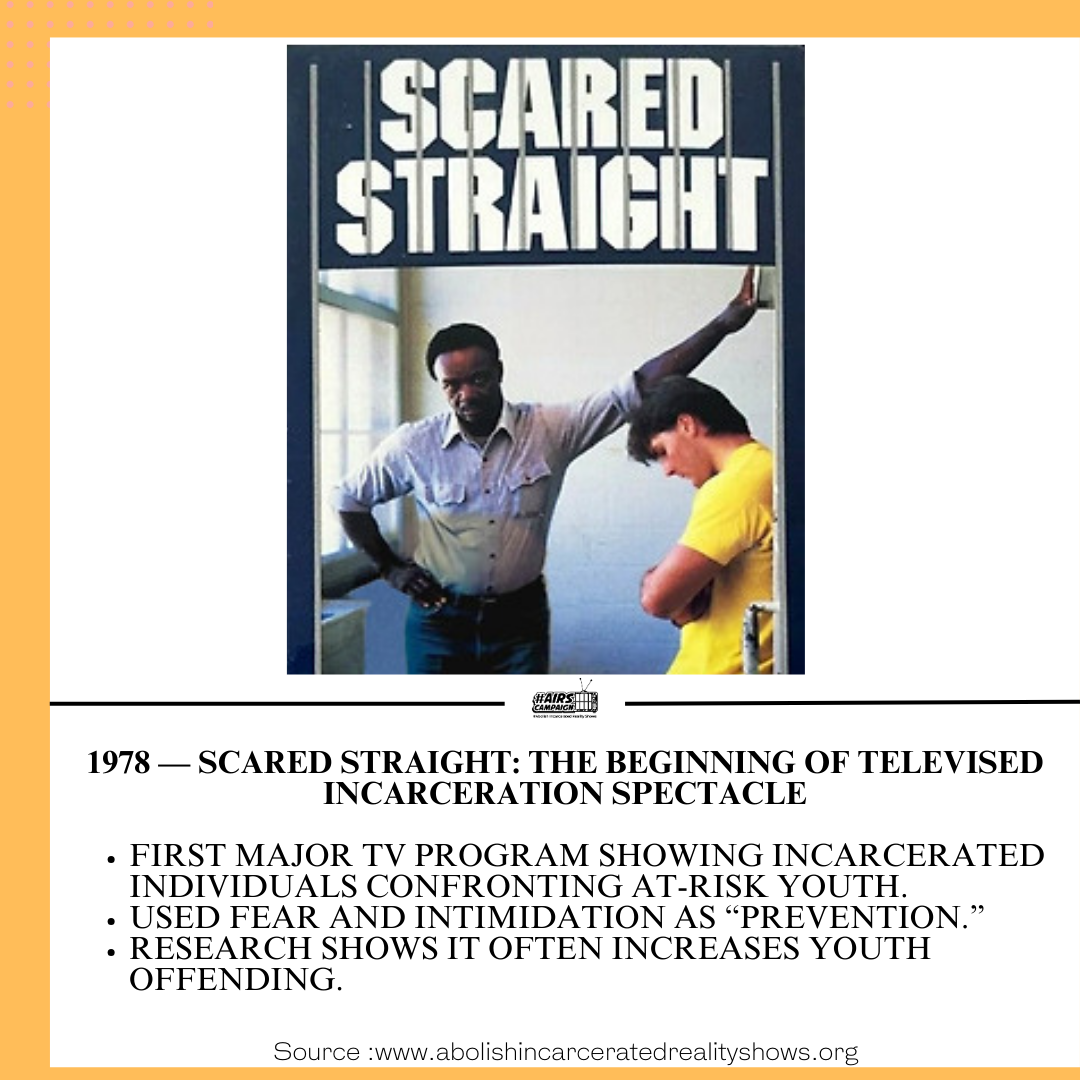
For nearly 50 years, television has turned incarceration into spectacle. It began in 1978 with Scared Straight!, which exposed at-risk youth to fear and intimidation—marketing it as “prevention” despite research showing it often increased offending. Throughout the 1980s and 1990s, follow-ups like Scared Straight! Another Story, 10 Years Later, and 20 Years Later reinforced the same model, laying the groundwork for modern prison reality TV.
In the 2000s, shows like Lockup, American Jail, Beyond Scared Straight, and 60 Days In turned daily life, violence, and isolation into entertainment. These programs dehumanize participants, exaggerate danger, and normalize constant surveillance—all for profit.
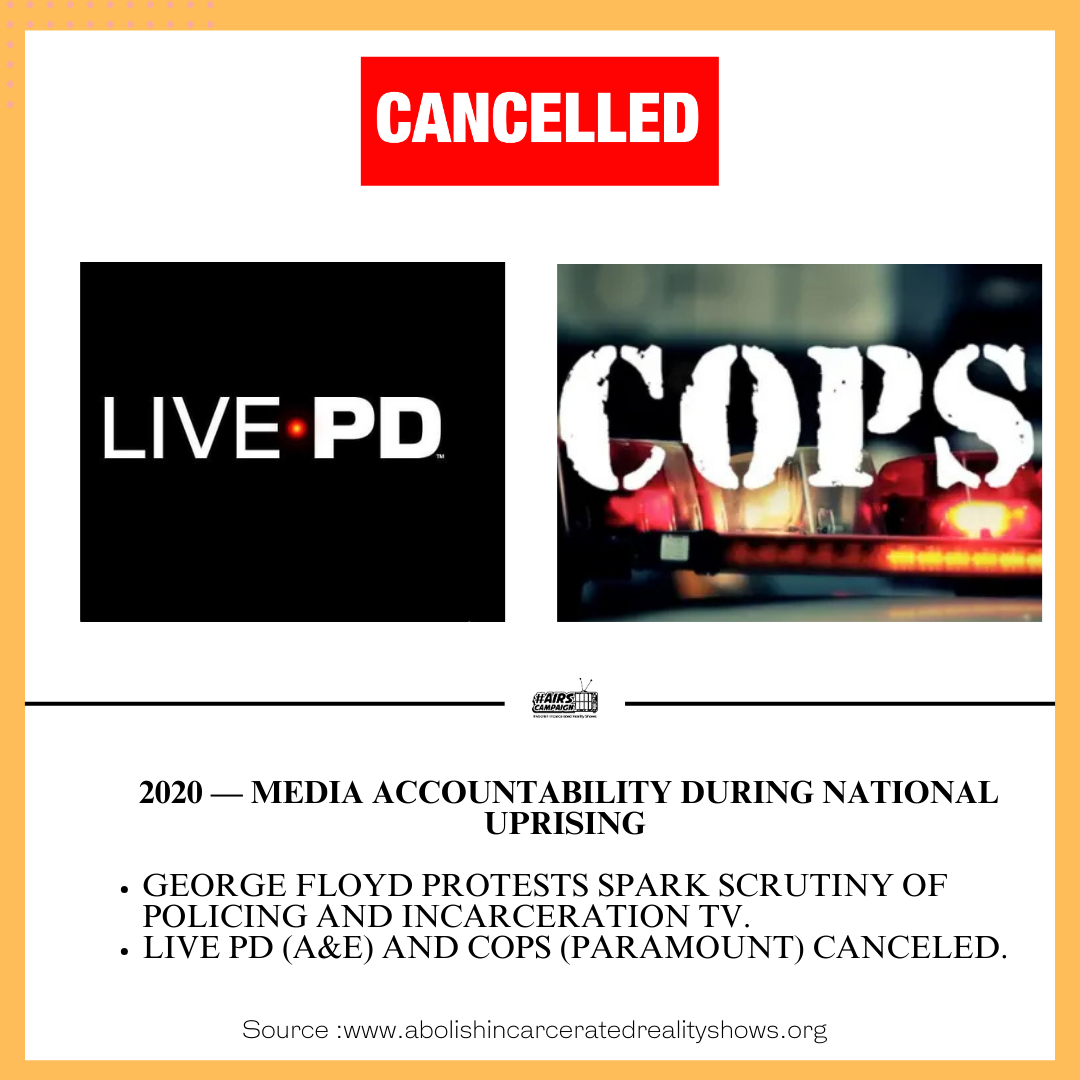
The nationwide protests after George Floyd’s murder in 2020 led to the cancellation of some shows, proving collective action can challenge harmful media. Yet, prison reality TV continues to exploit incarcerated people, reinforce harmful narratives, and treat human lives as storylines.
Human suffering should never be entertainment. The #AIRS Campaign demands accountability and an end to this exploitative programming.
AN INFOGRAPHIC ABOUT CARCERAL REALITY TV SHOWS EFFORTS
(As shown in the map below, Carceral Reality TV shows are being filmed in jails, prisons, and communities across multiple states, highlighting the widespread reach of this exploitative media industry.)
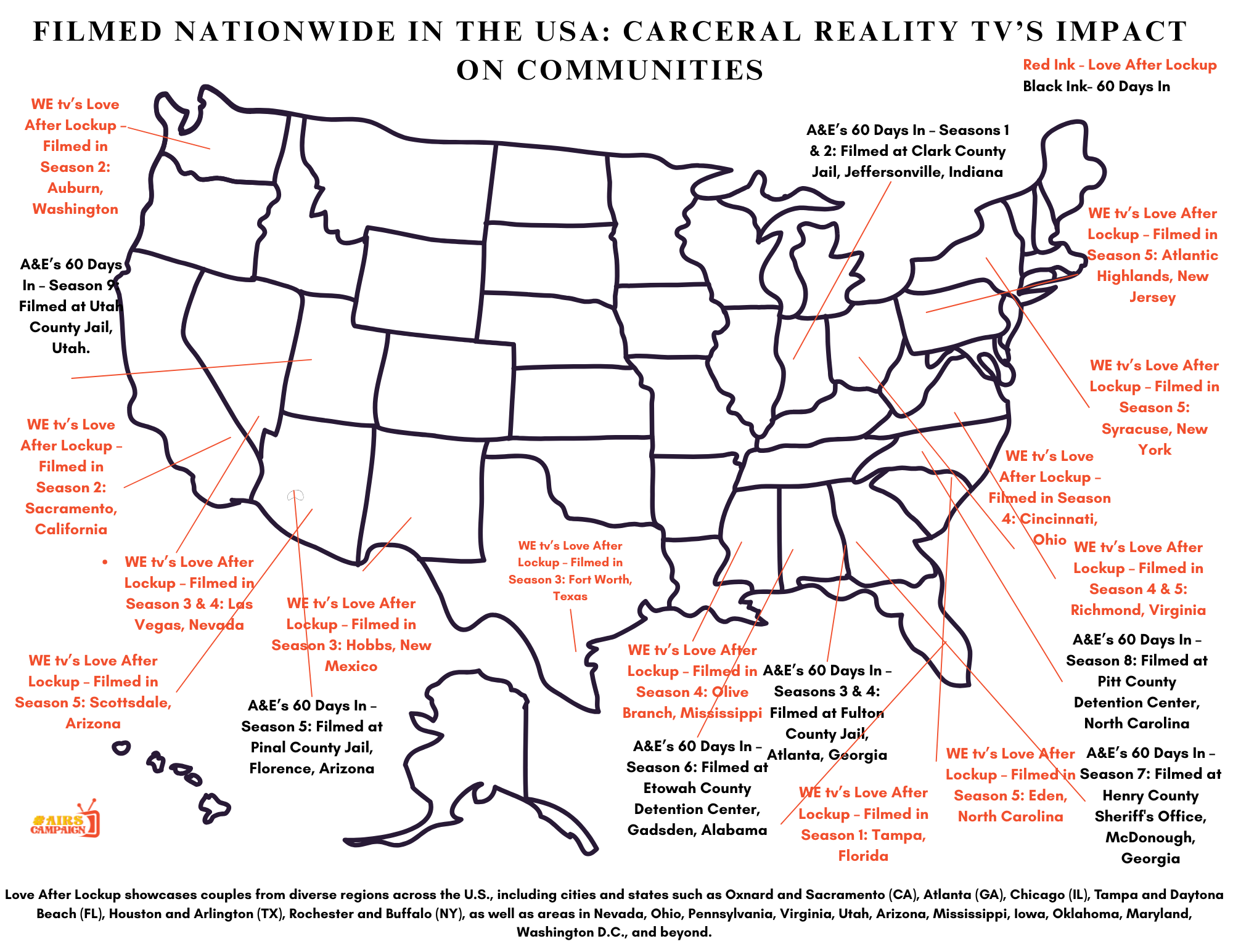
EXPOSING THE SPREAD OF CARCERAL REALITY TV
Across the country, from state prisons to local jails and even surrounding communities, reality TV productions are turning incarceration into entertainment. This map illustrates the alarming reach of this industry, revealing how widespread and normalized the exploitation of incarcerated individuals has become. By highlighting these locations, we aim to expose the systemic harms perpetuated by profit-driven media, spark critical conversations about ethics in entertainment, and mobilize communities to challenge and resist the commodification of human suffering.